The Kill
Interview with the VampireThe Kill names the vampire’s defining act of taking life through blood, but in Louis’s account it is never merely feeding. It is simultaneously an encounter with another person’s life, an experience of death passing into the killer, and the point at which vampire nature becomes undeniable. The act gives Louis an ecstatic release from longing while binding him to guilt, dependence, and the knowledge that animal blood cannot satisfy the same hunger. Through Lestat’s instruction and manipulation, the kill becomes both a bodily necessity and the novel’s most severe argument about morality, perception, and the limits of human identity.
Definition and First Experience
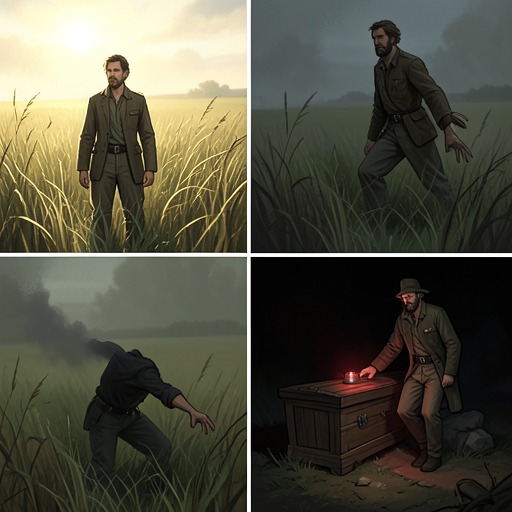
The first human kill reveals why Louis cannot regard vampirism as a simple change of diet. Lestat initially offers no ceremony or preparation: after attacking a solitary slave near the distant camp, he orders Louis to take another man. Louis resists, still unable to imagine that he might kill, and Lestat forces the encounter forward by gagging the struggling victim, baring his neck, and telling Louis that he cannot turn back. Louis’s newly formed teeth tear rather than puncture the flesh, but once the blood begins to flow, the surrounding world disappears.
The victim’s heartbeat becomes inseparable from Louis’s own. The distant drum, the man’s pulse, and Louis’s pulse seem to resound in one rhythm; the struggling body soothes the tension in Louis’s hands, and the act carries him toward weightlessness and sleep. The experience is therefore not presented as ordinary glutting. Louis describes it as an encounter with another life and with the loss of that life, while also repeating the sensation of his own life being surrendered when he drank from Lestat’s wrist. The kill becomes a reciprocal image of life and death: to drink another’s life is also to revisit the abandonment of mortal life within oneself.
The first feeding ends in danger rather than mastery. Lestat pulls Louis away after the man dies and warns him never to drink from the dead, because clinging to a corpse can draw the vampire into death as well. Louis’s frenzy makes him reach for the body again, and Lestat must slap him back into awareness. Excess blood leaves him with a grinding pain in his stomach, a physical consequence that exposes the gap between Lestat’s confident instruction and Louis’s unprepared body. At Pointe du Lac, Lestat dismisses the event as something Louis will soon become accustomed to, but Louis understands that the kill has been cataclysmic.
Animal Blood and the Limits of Substitution
Lestat later demonstrates that vampires can survive on animals. He catches a large field rat, cuts its throat, fills a crystal wine glass with its blood, and drinks it as delicately as burgundy before throwing the glass into the fireplace. He extends the lesson to rats, chickens, and cattle, explaining that animal feeding may be necessary during travel, especially aboard a ship, where hunting humans would cause panic and invite a search of the coffin. The practical lesson links the kill to concealment, transportation, and the maintenance of vampire secrecy.
Yet animal blood does not resolve Louis’s ethical crisis. He can feed on animals, but the result is only a vague longing rather than the peace produced by human killing. Lestat argues that this dissatisfaction proves the existence of a specific vampire nature. Louis’s attachment to mortal life, including his fixation on Babette, remains painful when he feeds like a pauper on rats; by contrast, killing a human would fill him with the life he was made to hold and silence the longing for a mortal who must eventually suffer and die.
This argument turns the kill into a contest between conscience and ontology. Louis wants morality to govern appetite: if animals can sustain him, he asks why he should not spare human beings. Lestat answers that the question mistakes the vampire for a human being who has retained a human relation to desire. The new creature cannot return to mortal warmth, nor can it recover mortality by treating blood as an ethical choice among equivalent forms of nourishment. The kill is the act through which Louis’s altered nature repeatedly instructs him, whether he accepts that instruction or not.
Lestat’s Philosophy of Predation
Lestat presents killing as the proper work of an immortal predator. He insists that vampires possess the detachment to see a human life in its entirety and to take satisfaction in becoming the end of that life. In his account, this is not an accidental corruption but a dark resemblance to divine power: God takes both the rich and the poor, and vampires likewise strike without regard to worldly rank. His phrase that evil is a point of view converts moral condemnation into a question of perspective, while his image of vampires as dark angels places predation within a cosmic rather than merely criminal order.
Louis does not simply accept this doctrine, but the kill repeatedly gives it temporary force. After drinking from a woman in the hotel, he recognizes that killing brings peace for the brief interval in which hunger is gone. The recognition horrifies him because it confirms Lestat’s claim: the killing of an animal leaves him restless, while human blood produces the fullness he cannot otherwise achieve. In the deserted streets near the ramparts, the pain and confusion briefly vanish beneath the river’s sound and the night wind, only to return when Lestat tells him to do what his nature demands. The moment becomes a forced recognition that peace is not freedom from vampirism but the temporary relief produced by obeying it.
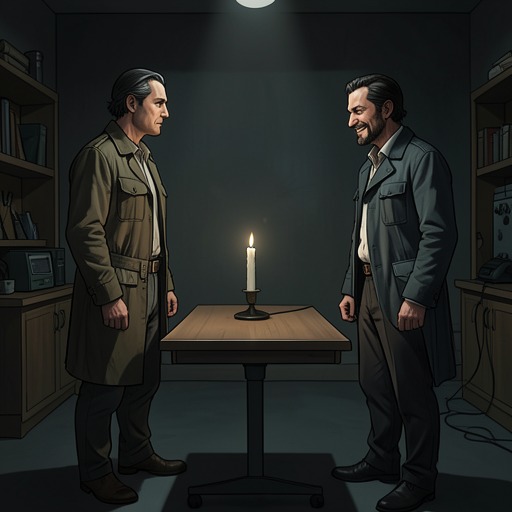
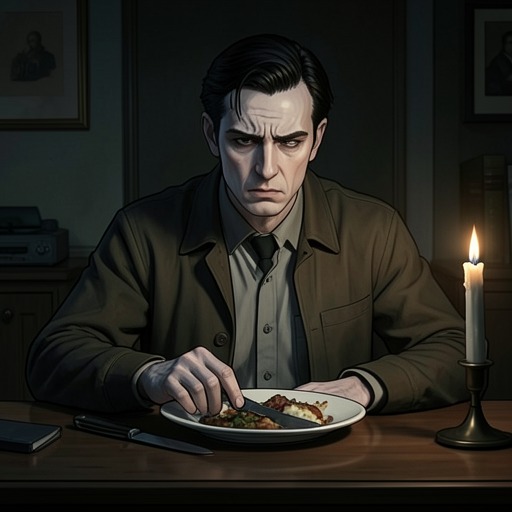
Lestat also makes the kill a performance of control. In the hotel, he feeds from one drunken woman while her companion remains unaware, then treats the unconscious victim as part of an ordinary social scene. After the blood warms him, he uses the change in his body to continue deceiving the second woman. The room’s dining arrangements, wine, candles, and polite conversation turn murder into a grotesque imitation of hospitality. The victim’s body is absorbed into the furniture and etiquette of the room, showing how the kill depends not only on teeth and blood but on the management of appearances.
With the second woman, Lestat’s cruelty becomes theatrical. He presents her death as a funeral and invites her to confess her sins while she begs for release. Louis finally intervenes, offers her a consoling religious formulation, and kills her himself. The scene forces him to cross from witness to participant: pity does not prevent the act but becomes the language through which he approaches it. Lestat then tells him that peace will come only when he can kill every night, making repetition the supposed cure for moral anguish. The kill is thus framed as both an initiation and a discipline, with each repetition expected to transform shock into habit.
The Child and the Manufacture of Desire
The most disturbing extension of the kill occurs when Lestat brings a dying child into the hotel after killing the child’s mother. He presents the girl to Louis as plump and sweet, emphasizes the strength of her still-beating heart, and deliberately recalls Louis’s earlier hesitation. Louis does not want to kill her, yet he hungers for the heartbeat that once pressed against his own. He is torn between the child’s vulnerability and the desire awakened by her living body.
Lestat’s persuasion turns compassion into another instrument of predation. He suggests that the child’s death is inevitable and that taking her will prove Louis capable of taking anyone. Louis recognizes that his thoughts about death being best for her are lies: he wants her. When the sick child stirs, he decides to kill her before she can wake and understand what is happening. The language of tenderness—her hair, cheek, and warmth—does not soften the kill; it intensifies the collision between intimacy and violence. The act repeats the earlier fusion of heartbeat and blood, but with greater force because the victim’s childhood makes Louis’s desire impossible to separate from his horror.
Claudia later stages the same collision with two orphaned boys. She presents them as a gift intended to reconcile herself with Lestat, having found them asleep after a meal served on fine china and wine-stained tablecloths. Lestat’s appetite is aroused by their beauty, while Claudia’s deliberate arrangement turns the children into an offering within the household’s ritual of conflict. Their small bodies, abandoned sleep, and bare throats place innocence beside the etiquette of a shared domestic room. The kill therefore becomes a family transaction: feeding is used to flatter, reconcile, manipulate, and expose the competing natures of Claudia, Louis, and Lestat.
Aftermath, Memory, and Meaning
The kill leaves consequences that extend beyond the immediate death. Louis’s first feeding teaches him that drinking after death is forbidden and physically dangerous; his later human feedings teach him that animal blood cannot extinguish the hunger that defines him. The act also alters his relation to beauty. Mortal life, which he once observed from a distance, becomes visible to him only through its exhaustion and disappearance. Lestat’s claim that vampires can see death in all its beauty gives aesthetic intensity to violence, but Louis’s experience keeps that beauty inseparable from suffering, fear, and responsibility.
The search for other vampires deepens the concept by contrast. In eastern Europe, Louis and Claudia encounter creatures that are mindless corpses rather than conscious predators: rotting figures with empty eyes, ragged clothes, and no secrets to communicate. Their existence makes Louis fear that Lestat may have died and that conscious vampire life is rare or accidental. The contrast confirms what the kill means for Louis: it is not merely evidence of undeath, but the activity through which consciousness, appetite, and moral torment remain joined. A vampire without reflective awareness can kill, yet cannot transform killing into knowledge.
The concept also travels with Louis across spaces and cultures. From Pointe du Lac and New Orleans to the ship crossing the Mediterranean Sea, the eastern European villages, Paris, Egypt-bound roads, New York, and finally New Orleans again, the kill remains the portable law of vampire existence. In Paris, Louis’s pursuit of beauty and knowledge gradually loosens the human associations that once made art meaningful; after Claudia and Madeleine are destroyed, paintings and bodies alike appear detachable from their makers and reducible to ashes. When Louis returns to New Orleans and discovers Lestat in a decaying house feeding on animals, the scene reverses Lestat’s earlier authority: the teacher who once declared human killing the vampire’s nature now appears bent, shivering, and dependent on cats and a stolen child’s presence. The kill has not ceased to govern him, but its relation to power, dignity, and consciousness has become unstable.
For Louis, then, The Kill is both the source of vampire peace and the wound that peace cannot heal. It supplies strength, warmth, and temporary release from longing, yet each fulfillment confirms the loss of the human self he wishes to preserve. Lestat treats this contradiction as proof that conscience must surrender to nature; Louis turns it into the central problem of his existence and of his telling. The kill is therefore not simply what vampires do. It is the act through which the novel tests whether appetite can become knowledge, whether beauty can survive violence, and whether moral feeling remains meaningful after immortality has made death into a form of nourishment.